
The biodiversity associated with the seagrass meadows of Shark Bay, under the scrutiny of new environmental DNA technologies
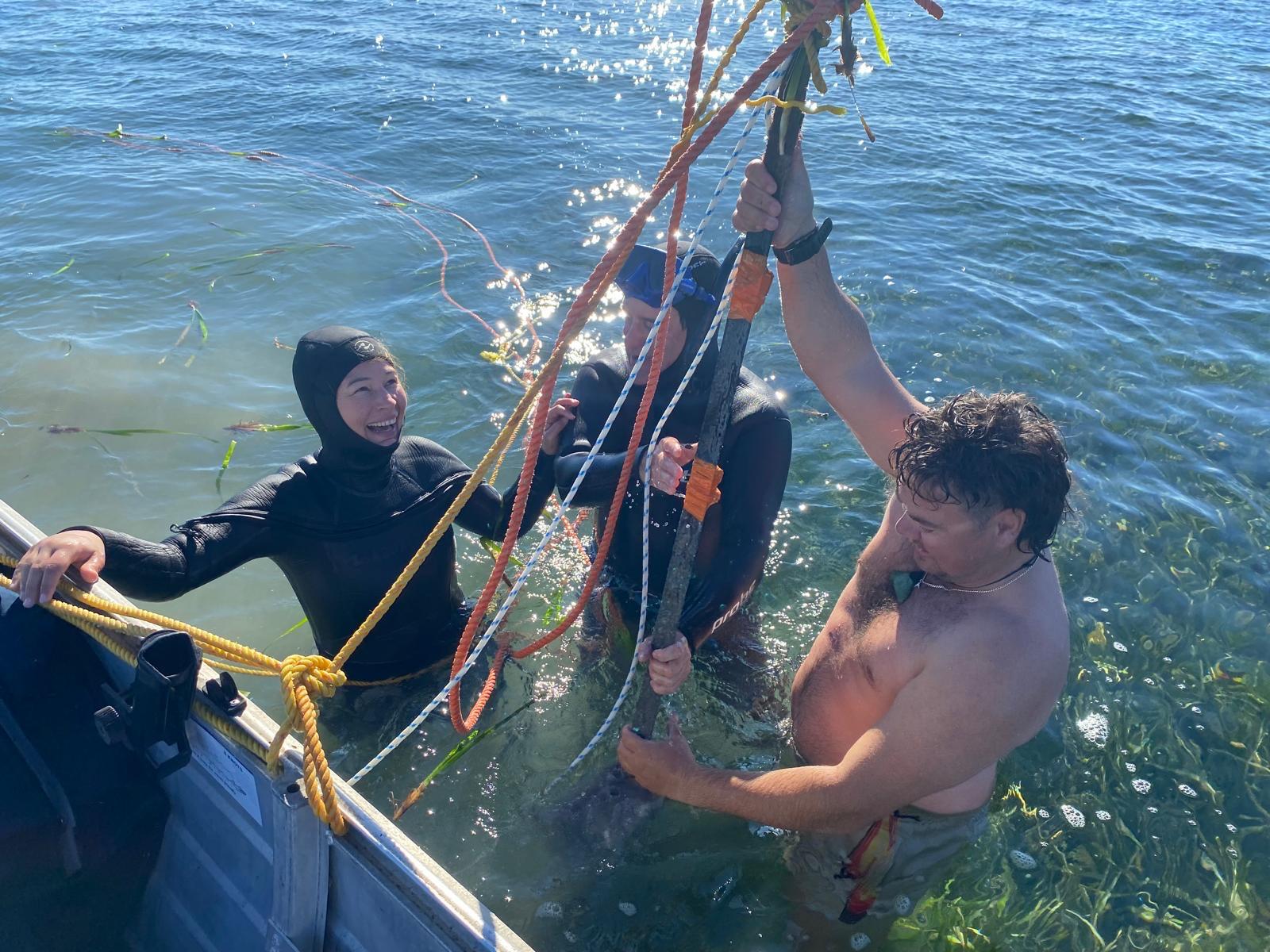
The GAME group is participating in an international campaign to assess the biodiversity and natural capital of the seagrass meadows in Shark Bay, Western Australia.
BIOSFERA Research & Conservation SL (hereinafter, BIO) received a two-year project from Conservation International Australia to create a "Toolkit for the Assessment of Seagrass Meadow Natural Capital" in order to capitalise on market opportunities related to natural capital and biodiversity for the restoration of seagrass meadow ecosystems through cutting-edge environmental DNA (eDNA) technologies and strong partnerships. To achieve this goal, in mid-September, Karina Inostroza (BIO) led the second expedition to Shark Bay (Western Australia) to assess biodiversity in resilient, restored, and lost meadows of Posidonia australis and/or Amphibolis antarctica South of Denham. The assessments included water and sediment sampling for eDNA collection, visual studies of fish and macroinvertebrates, photographic studies of the benthos, and in situ evaluations of the composition and structure of seagrass species using Seagrass-Watch methodologies.
Biodiversity assessments, using traditional in situ visual observation methods and more recent environmental DNA (eDNA) approaches, have also been carried out at the sites of a restoration project funded by BHP and led by the company Clima de Luna de Marea and Nature Pty Ltd., owned and managed by indigenous people. The team for this expedition was made up of Karina Inostroza (BIO), Alex Dood and Sean McNeair (Tidal Moon), Marlene Wesselmann (Edith Cowan University) and Miguel A. Mateo (Group of Aquatic Macrophyte Ecology, GAME/CEAB-CSIC and ECU). This joint initiative brings together a rich diversity of perspectives, resources and expertise, proving to be a highly efficient strategy to better understand, protect and restore the invaluable natural capital of Shark Bay, one of the most magnificent UNESCO World Heritage sites on our planet.
Related Posts
We want to know your opinion about the Spanish coastal ecosystems.
G3ECA launches a survey to find out how citizens perceive the state, the threats and…
Scientists discover an "invisible tool" that lasts 14,000 years and reveals the memory of our soils' health
An international team of researchers has identified a soil protein capable of acting as…