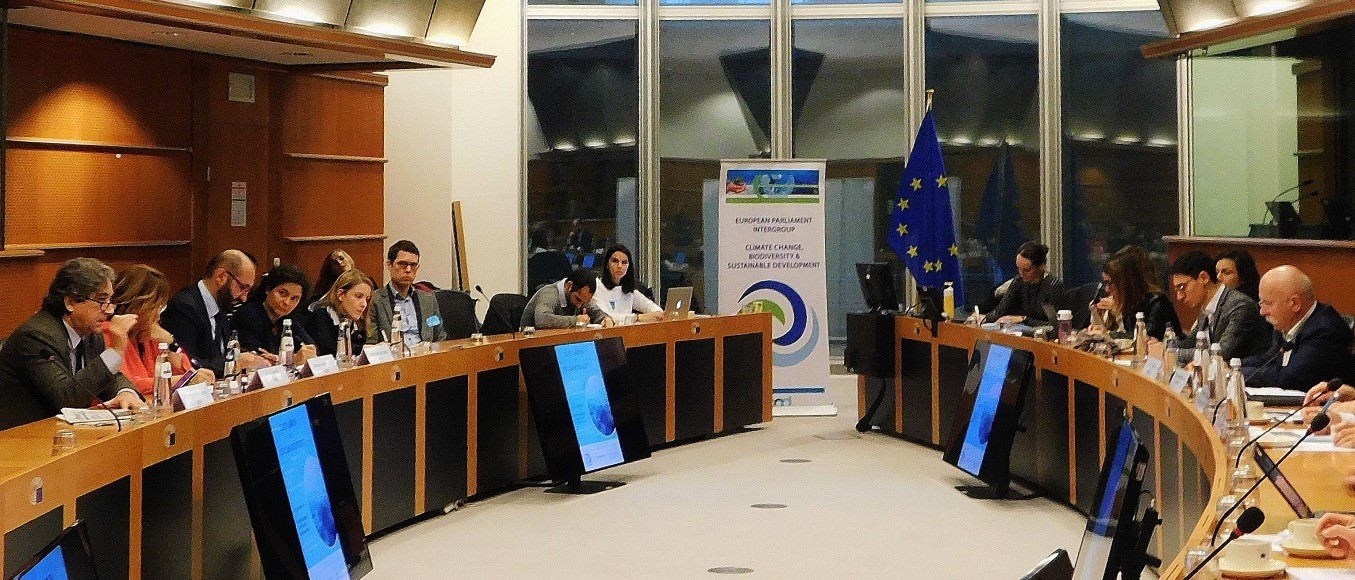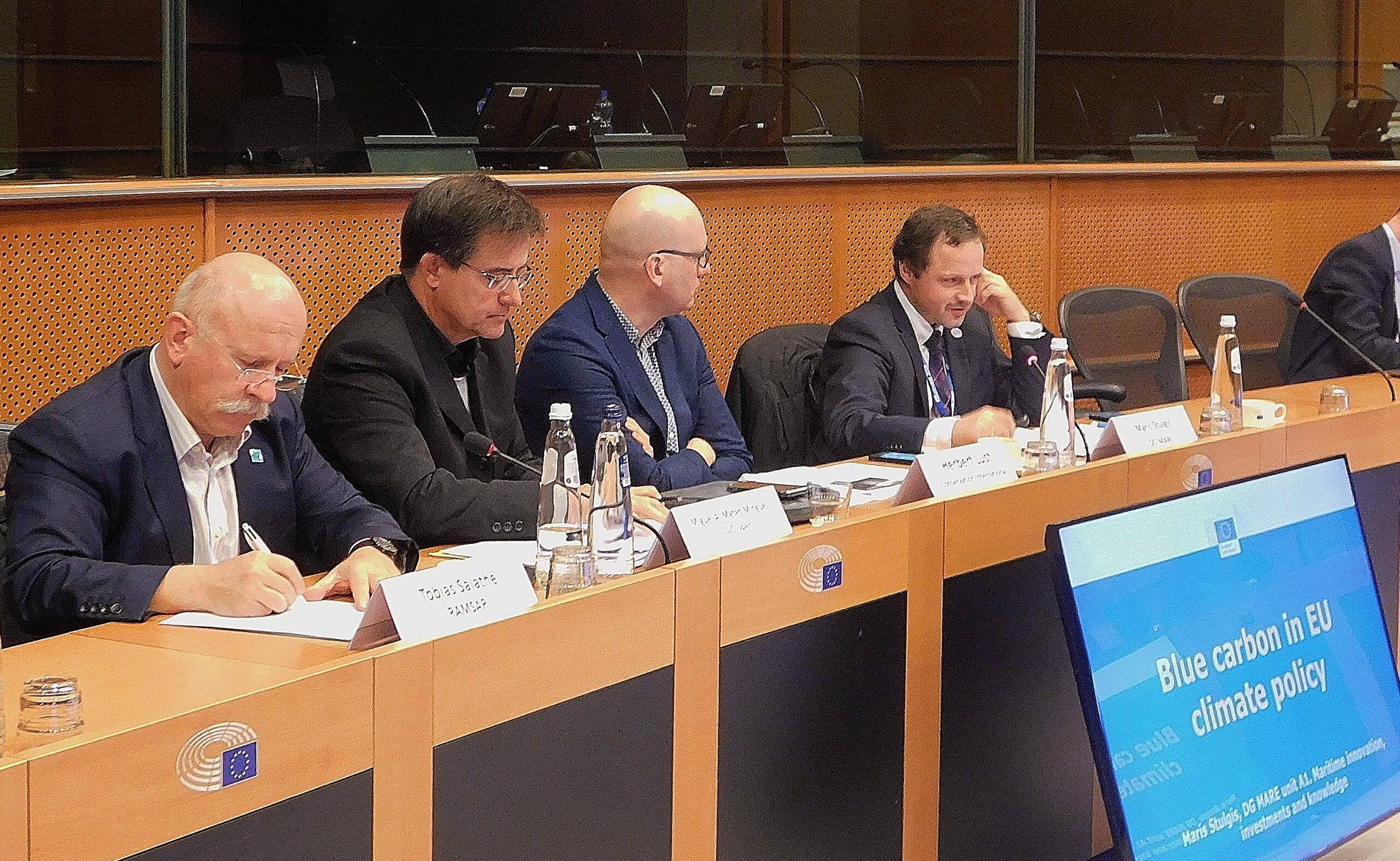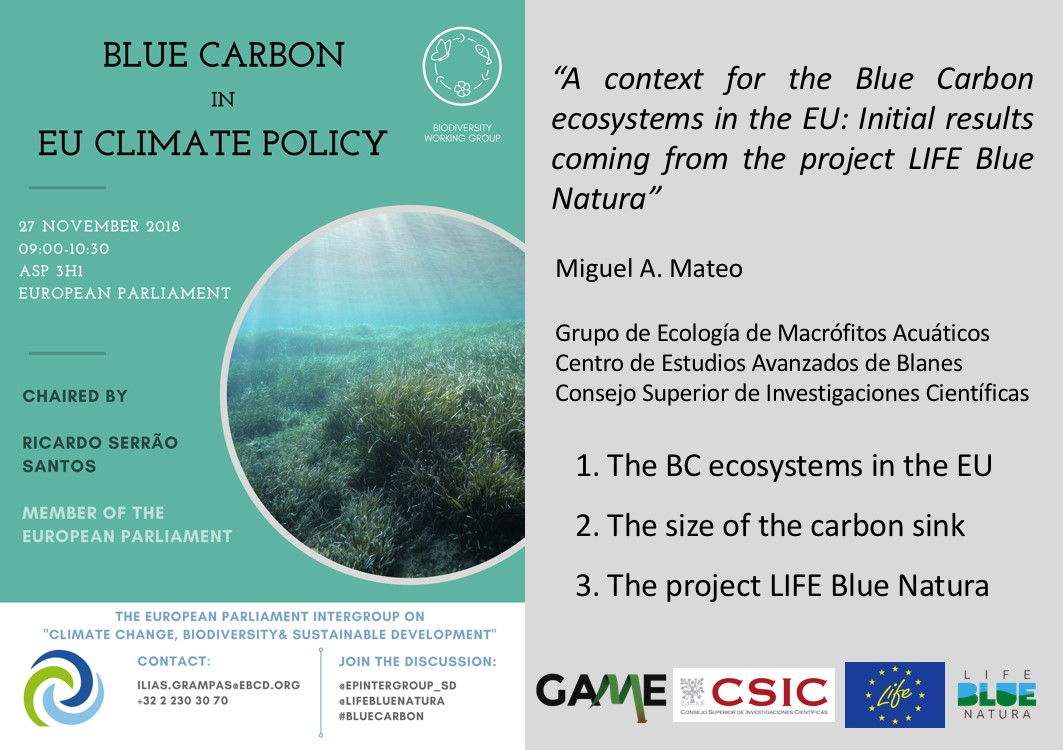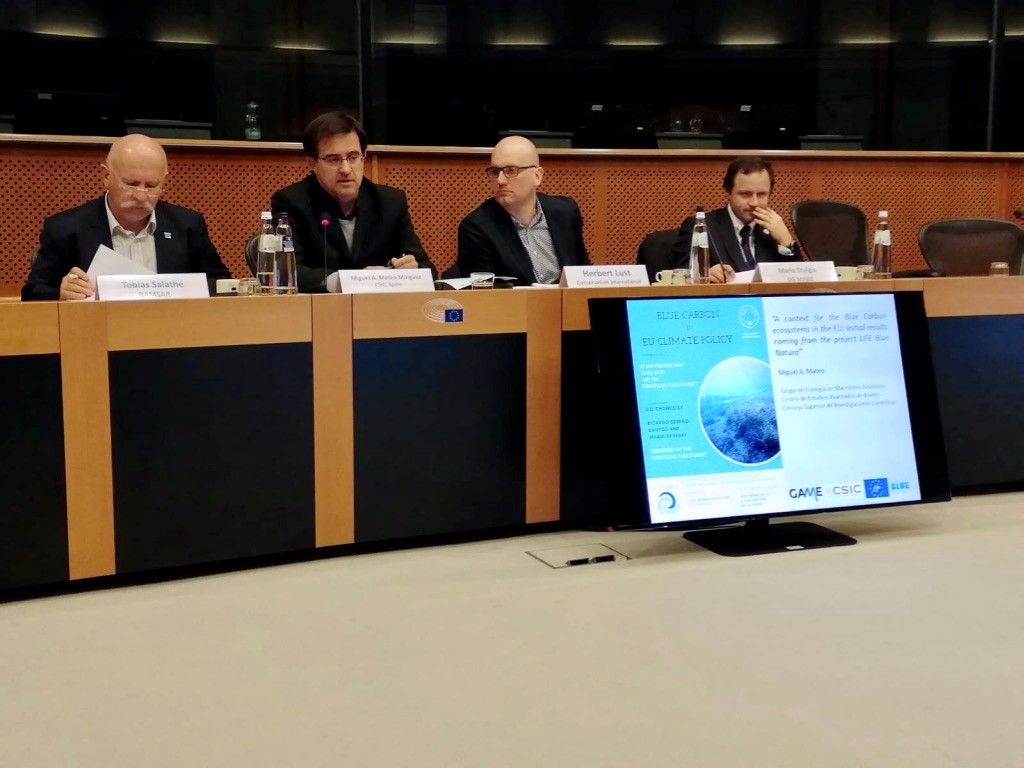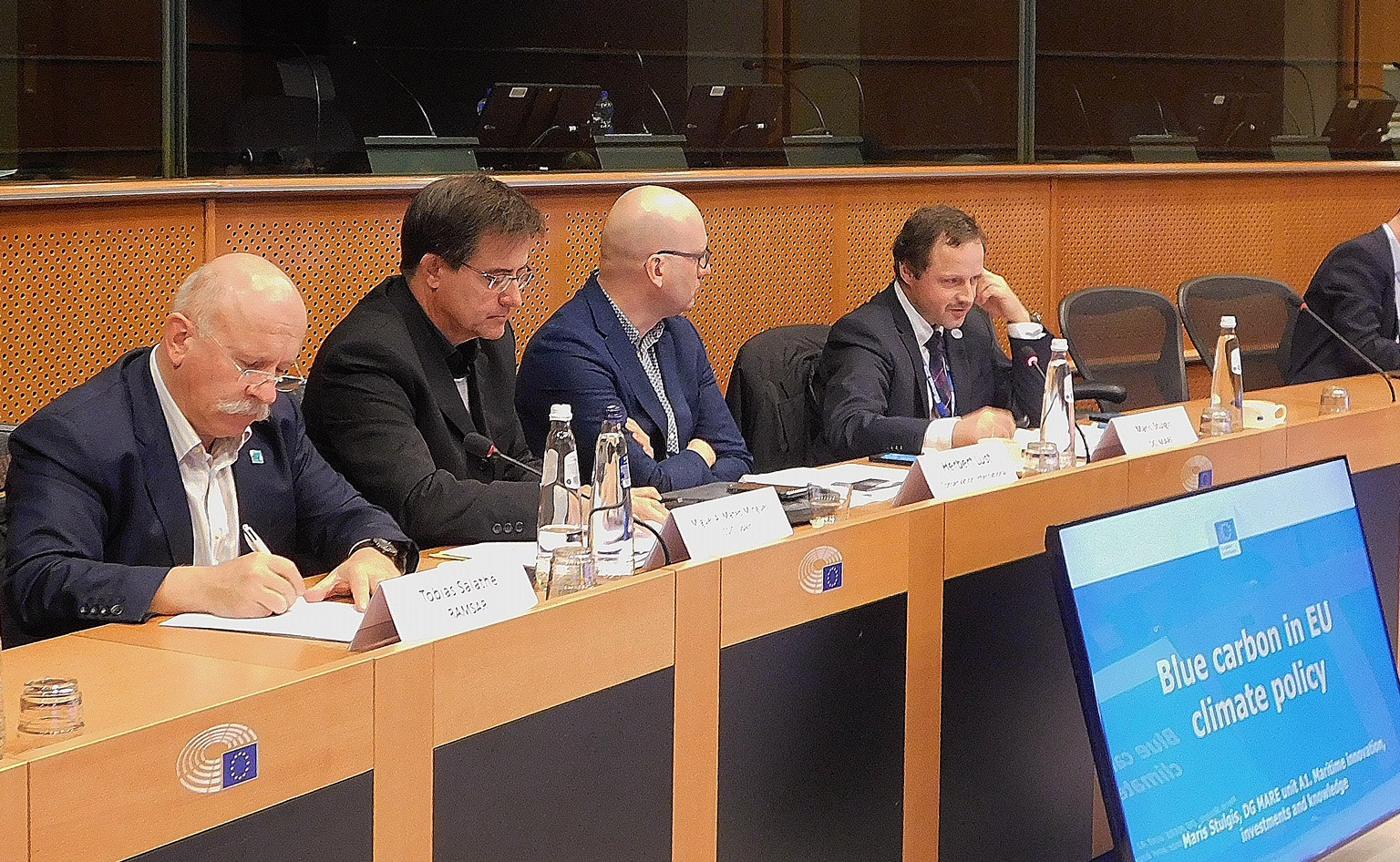
Last Tuesday, Miguel Ángel Mateo Mínguez (Group of Aquatic Macrophyte Ecology, Centre for Advanced Studies of Blanes – CSIC) was invited by the International Union for the Conservation of Nature (IUCN) to the debate “Blue Carbon in EU Climate Policy” as one of the leading experts on Blue Carbon in the European Union.
The debate was hosted at the European Parliament (Brussels) by the Members of the European Parliament (MEPs) Ricardo SERRÃO SANTOS and Maria SPYRAKI, and organised by the European Parliament Intergroup on “Climate Change, Biodiversity & Sustainable Development”.
Miguel A. Mateo was committed to presenting for the first time in the EU Parliament a context on the possible role of European seagrass meadows and saltmarshes in the global carbon cycle and their potential to be included in the CO2 emission offset inventories of the EU. “Seagrass meadows and saltmarshes occupy about 30,000 and 5,000 km2 in the EU, respectively. Jointly they store CO2 stocks equivalent to the annual emissions of China and as much as 30 years of CO2 "emissions of Spain," explained Mateo.
Terrestrial forests are the only ecosystems recognised by international conventions as eligible for carbon offset projects (“compensate for your excess emissions by planting trees”). GAME is a pioneering group in researching the phenomenon of long-term carbon accumulation in the world’s coastal ecosystems, and in advocating for the inclusion of these ‘marine coastal forests’ in national emissions offset systems. “The stocks in EU coastal vegetated ecosystems amount to 57% of those stored in all the terrestrial forests of the EU; furthermore, Blue Carbon ecosystem soils are five times more efficient at sequestering CO2.2 than terrestrial forests; it is therefore five times more cost-effective to invest in the restoration or conservation of seagrass meadows and saltmarshes than in terrestrial forests,” says Mateo.
The panel also included the NGO Conservation International, RAMSAR (Convention on Wetlands), and DG Mare (EU Directorate-General responsible for Maritime Affairs and Fisheries). The group agreed that it is urgent to take political action to protect and restore these ecosystems due to their contribution to CO mitigation.2 emissions and on the need for more research to improve the current estimates of stocks and fluxes. After all, quality research is essential as a foundation for efficient and successful management policies.
The reaction of the MEPs hosting the event was very positive, as reflected in their comments during the debate and via Twitter: “While we need to focus efforts on achieving the objectives of the Paris Agreement, the role of Blue Carbon is key to reducing emissions and supporting Climate Actions. At the European level, the Mediterranean region offers plenty of good practices that must therefore be supported,” said Maria Spyraki, with a clear reference to the LIFE Blue Natura project.
The EU Intergroup also published: “According to the European Commission, this is a crucial time to address the issue of Blue Carbon in climate policies. DG Mare calls for the oceans to be considered part of the solution, and the conservation and restoration of coastal habitats is key.”
Miguel A. Mateo concluded his contextualisation of the BC in the EU by saying that, “Although rough, the estimates presented here strongly suggest that, even if only based on the carbon sequestration service, the conservation and restoration of EU seagrass meadows and saltmarshes could be economically self-sustainable.”
The next steps will be to maintain the momentum gained in this initial contact with high-level policymakers to ensure that BC ecosystems are considered as equally relevant as terrestrial forests in climate change mitigation policies by conveying the message to even higher levels. The Junta de Andalusia has taken a pioneering step in the global context by including BC ecosystems in the region’s emissions offset inventory system (SACE). The LIFE Blue Natura project, with CSIC (GAME-CEAB) as one of the main partners, has been working to provide the accurate science needed to achieve this goal. It is planned to scale up the LIFE Blue Natura approach to the national and EU levels in the short to medium term.
https://game-csic.com
http://life-bluenatura.eu/en/home/