
First Training Workshop for Managers and Technicians in the Development of Blue Carbon Projects
Odiel Wetlands, Huelva, Spain, 16 – 18 September 2019
ORGANISE  as part of the project
with the collaboration of  for technical presentations.
Blue Carbon, The carbon assimilated and stored by marine and coastal ecosystems such as wetlands, salt marshes, mangroves, and seagrass meadows represents a significant natural carbon sink, and as such, can provide new incentives prioritising the restoration and conservation of these important ecosystems. Therefore, comprehensive and innovative Blue Carbon projects are being launched worldwide, helping to consolidate the fundamental work of analysis and assess the potential of these ecosystems, with the aim of promoting a strong drive on the contribution these habitats can make to mitigating global climate change.
This first workshop aims to develop the participants' ability in:
- Identify the applications behind the concept of Blue Carbon and its potential to promote the value of conservation and restoration of coastal wetlands.
- Prepare emission reduction or absorption projects for the voluntary Carbon market and understand the necessary documentation, monitoring, and verification costs for the development of these projects.
- Evaluate opportunities and limitations for implementing Blue Carbon projects.
The workshop to be held from 16-18 September 2019 is aimed at those interested in the conservation and restoration of coastal ecosystems (particularly seagrass meadows and wetlands) or in the area of climate change, including technicians and managers of natural resources and protected areas, environmental consultancies, researchers, and associations.
AGENDA
MONDAY 16th SEPTEMBER
Tomorrow 9:00-13:30
9.00-9.15 Welcome
9.15-10:35 Session 1
Blue Carbon – Introduction to the concept.
Explanation of the concept, carbon cycles versus carbon storage, why do we focus on salt marshes and seagrass meadows?
Overview of blue carbon projects implemented worldwide.
10:35 -11:00 Session 2
Measurement of blue carbon ecosystems extent/variation, carbon sequestration, carbon stocks
Coastal wetlands as carbon reservoirs, sources, and sinks.
- Main parameters for developing a field measurement plan.
Coffee Break 11:00-11:20
Session 2 (Continued)
- Calculation of the total carbon stock in coastal wetlands
- Calculation of extension / variation.
- Other considerations for carbon accounting in seagrass meadows.
Lunch 13:30-14:20
14:20-17:30 Session 2 (Continued)
Measurement of blue carbon ecosystems: extent/variation, carbon sequestration, carbon stocks
Seagrass meadows as carbon reservoirs, sources and sinks.
Main parameters for developing a field measurement plan.
- Measure the stock / sequestration of blue carbon and estimate the emissions.
- Correction of inorganic carbon content.
- Calculation of the total carbon stock in seagrass meadows (example of Posidonia)
- Calculation of extension / variation.
- Other considerations for carbon accounting in seagrass meadows.
17:30-19:00 Field sampling of soil and vegetation carbon in a coastal wetland (Demonstrative work)
TUESDAY 17 SEPTEMBER
Tomorrow 9:00-13:30
9.00-10.15 Session 3
- Carbon markets – baseline and credit mechanisms.
- Diving into voluntary carbon markets: Drivers and motivations.
Coffee Break 11:00-11:20
11:00-13:30 Development of blue carbon projects
- Evaluation of the eligibility / feasibility of the carbon project
- Certification process for carbon (blue) projects.
Lunch 13:30-14:20
14:20-17:30 Session 3 (Continuation)
Implementation of Blue Carbon projects
- Step-by-step guide to preparing a Blue Carbon project
- Presentation of different projects.
WEDNESDAY 18 September
Tomorrow 9:00-13:30
9.00-11.00 Session 4
Relevant international and national policy for blue carbon projects
- Introduction to relevant international and national policies, including blue carbon in the context of the UNFCCC.
Coffee Break 11:00-11:20
Session 4 (Continuation)
- Double accounting, national GHG inventories and NDC.
Lunch 13:30-14:20
14:20-17:30 Session 4 (Continued)
- Project case study.
- Review of key principles and important elements.
17:30-18:00 Final comments and workshop closing.
Related Posts
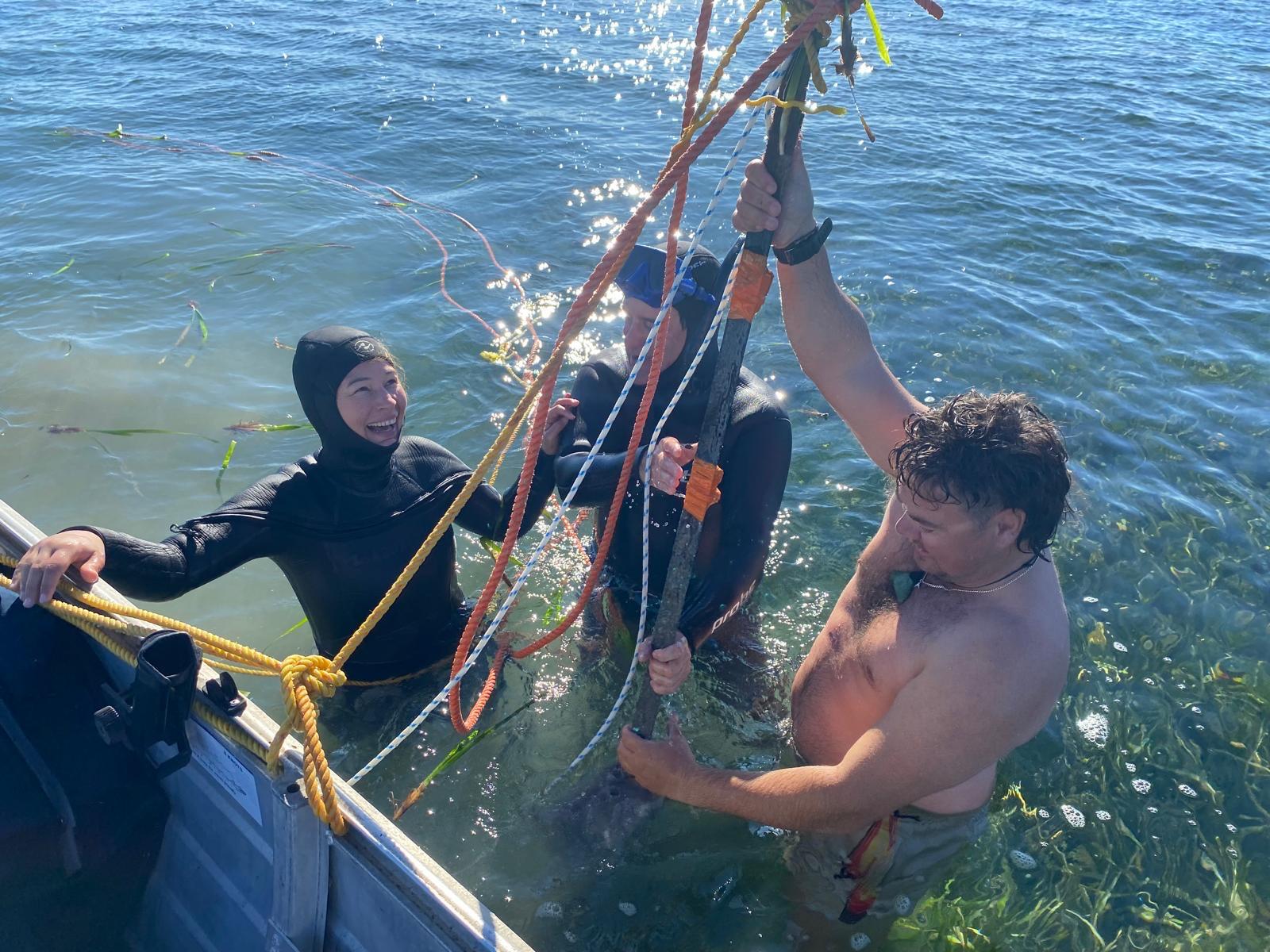
The biodiversity associated with the seagrass meadows of Shark Bay, under the scrutiny of new environmental DNA technologies
The GAME group is participating in an international campaign to assess biodiversity and capital…
We want to know your opinion about the Spanish coastal ecosystems.
G3ECA launches a survey to find out how citizens perceive the state, the threats and…