
3,000 years of marine sediments reveal that mercury pollution in Western Australia has not increased since European colonisation.
Journal and authors: ScienceDirect | Martin Dahl, Larissa Schneider, Harald Biester, Richard Bindler, Antonio Martinez Cortizas, Paul S. Lavery, Miguel A. Mateo, Oscar Serrano
No increase in mercury contamination in coastal Western Australia since European settlement
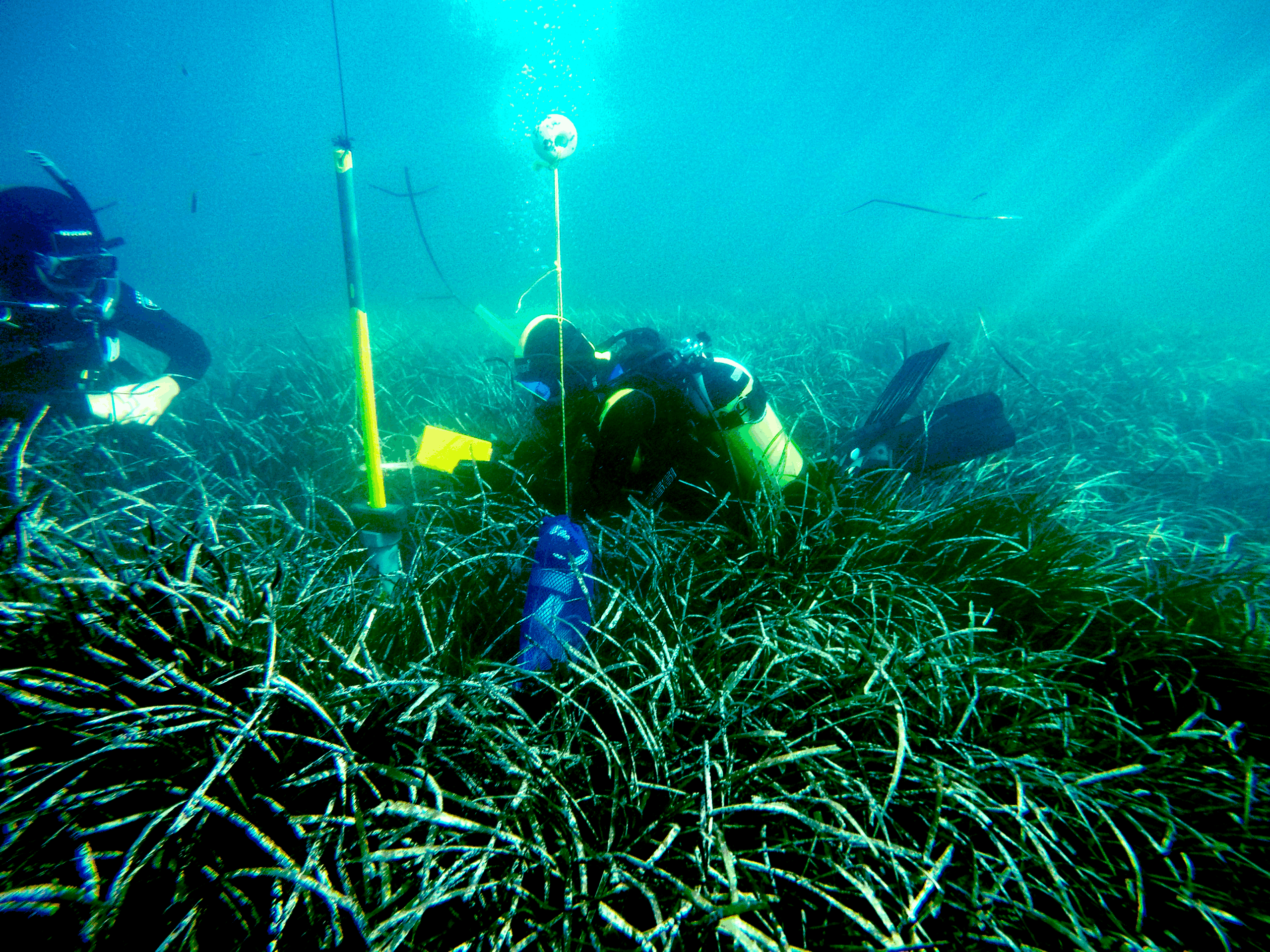
Researchers analysed sediments from seagrass meadows of Posidonia australis in Western Australia, which maintain a continuous environmental record of more than 3,000 years. The results show that, unlike what occurs in many areas of the northern hemisphere, mercury levels have not increased significantly in this region since the arrival of Europeans in the 19th century. The apparent increase observed in the sediments is actually due to a greater accumulation of organic carbon and not to a higher external input of mercury. This finding highlights the role of seagrass meadows as natural archives that allow us to understand the evolution of pollution and establish baseline levels prior to human influence.
Related Posts
8/28/2026
The biodiversity associated with the seagrass meadows of Shark Bay, under the scrutiny of new environmental DNA technologies
The GAME group is participating in an international campaign to assess biodiversity and capital…

8/27/2026
We want to know your opinion about the Spanish coastal ecosystems.
G3ECA launches a survey to find out how citizens perceive the state, the threats and…