Seagrass meadows and salt marshes as natural CO2 sinks: a potentially profitable resource
Matthew, MA. Expert in Blue Carbon. Senior scientist at the Centre for Advanced Studies of Blanes (CEAB-CSIC) and head of the Aquatic Macrophyte Ecology group (GAME).
The accelerated warming that the planet is experiencing is a proven consequence of the increase in carbon dioxide in the atmosphere. The effects of this warming are beginning to become evident in the form of an increase in extreme weather events and aridification, among other phenomena. Society can combat these effects in two ways: by reducing CO2 emissions and by increasing its sequestration capacity. The latter strategy can be implemented through geological storage or by enhancing natural biospheric sinks.
CO2 fixation is a process reserved for the primary producers of our planet who, through photosynthesis, transform atmospheric CO2 into carbon-rich organic matter. Some of these primary producers have forms of carbon accumulation that are massive and very stable over time, making them effective carbon sinks and therefore allies against global warming. Such is the case with terrestrial forests, soils, or coastal vegetation. The latter group includes salt marshes, mangrove forests, and seagrass meadows. Collectively, they are known as Blue Carbon.
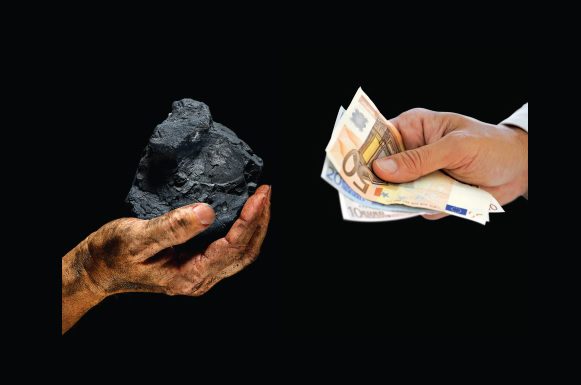
Just over a decade ago, the EU Emissions Trading System (EU ETS) was established to promote the reduction of greenhouse gas emissions in a cost-effective and economically efficient manner. This carbon market allows trading in carbon credits (emission allowances) so that countries emitting more CO2 than allocated under international conventions can purchase allowances from those emitting less. To simplify, one carbon credit is equivalent to one tonne of CO2. The price of a tonne of CO2 fluctuates according to the laws of supply and demand.
In this trading scheme, a carbon credit can be obtained through actions that prevent emissions or achieve the storage of one tonne of carbon. The effectiveness of these actions must be duly certified through protocols and standards established by international conventions. Large forest masses and coastal vegetation fix and store significant amounts of CO2, making them eligible for trade. Thus, any reforestation or afforestation project will involve the removal of a certain number of tonnes of CO2 from the atmosphere, which can be traded on the carbon market. Likewise, any action that demonstrates the slowing down of the deterioration of carbon sink ecosystems can certify an amount of tonnes of carbon that have ceased to be emitted, which will also be tradable.
The Aquatic Macrophyte Ecology Group (GAME) is currently working on a European LIFE programme project aimed precisely at laying the foundations for the inclusion of coastal vegetation in official inventories for trading in regular carbon markets. The Parliament of Andalusia is drafting a Climate Change Law which includes, for the first time in Europe, the...
Coastal vegetation as carbon sinks that can be used for greenhouse gas emissions offsetting. The project covers all aspects of the issue: from the development of sampling and laboratory methodologies to the preparation of offset projects.
This project aims to lay the foundations for administrations and small and medium-sized enterprises to consider the observation of coastal vegetation from a double-win perspective: conserving a natural heritage of great value (far beyond the ‘CO2 storage’ service), while also contributing to the development of the local economy.
GAME offers its experience and capabilities for:
– Conduct studies to quantify stocks and flows of carbon sinks of
carbon both terrestrial and marine.
– Train technicians from administrations and SMEs in field sampling,
processed in the laboratory and calculation of carbon stocks and flows in
Both terrestrial and marine sinks.
– Advise on the development and monitoring of compensation projects.
– Advise on strategies for compensating greenhouse gas emissions
greenhouse.
https://game-csic.comproyectos/life-blue-natura/
http://life-bluenatura.eu/es/inicio/
Related Posts
The "Blue Carbon Trip" itinerant campaign takes a break until spring 2019.
The «blue carbon trip», one of the Life Blue Natura dissemination actions, is taking a…
Dr Mokos visiting GAME
Melita Mokos is a marine biologist, PhD, working as a postdoc at the University of…