
A new study led by GAME (CEAB-CSIC) presents the first global inventory of carbon stored by seagrass meadows.
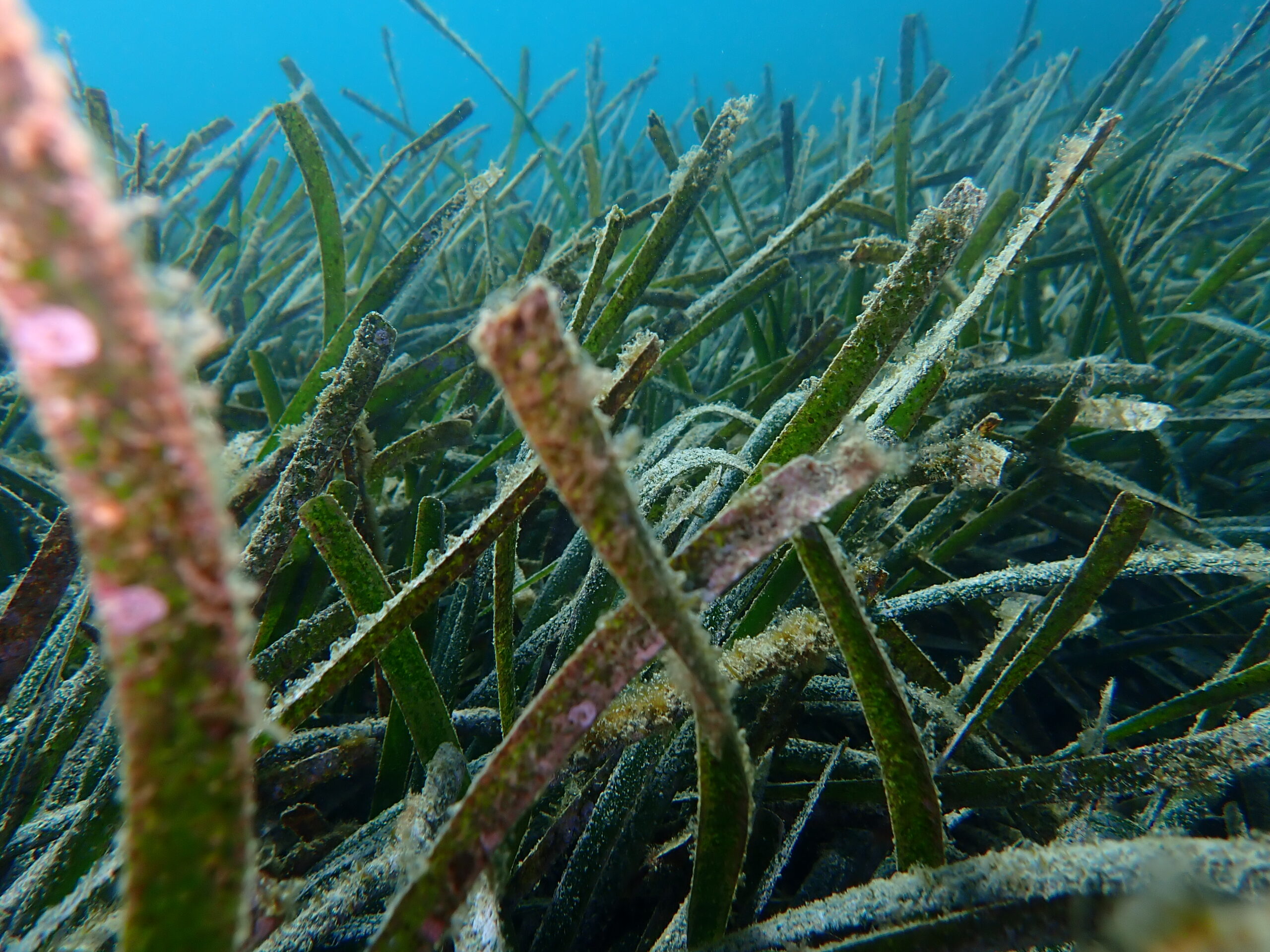
The study, published in Nature Communications, states that the living parts of seagrass meadows (leaves, rhizomes, and roots) can retain up to 40 million tonnes of carbon, which highlights its relevance in the face of climate change.
The research has been led by the Centre for Advanced Studies of Blanes (CEAB-CSIC) and the organisation BIOSFERA Research & Conservation, with the participation of Edith Cowan University (Australia), the University of Western Australia, James Cook University, the Institute of Marine Sciences (ICM-CSIC), and the King Institute of Marine and Coastal Research (CONICET, Argentina).
It is the first global "inventory" of blue carbon sinks represented by seagrass meadows or marine flowering plants. Provide both the CO calculations ₂ that capture, as from their production —from to say , of the transformation of the dioxide from carbon in new plant biomass— , how to delete stock that they store. Also offers figures of the emissions derived from its loss .
In addition to outlining a global vision, The article provides detailed data by regions and countries of the world. and by types of meadow. This allows quantifying the role of each one, of each region, of each sea and of each ocean in the carbon cycle and enables each territory to understand the importance of its own seagrass meadows.
Seagrass meadows: a hidden treasure
Seagrass meadows, such as Posidonia, cover an area of between 160,000 and 266,000 km² on the planet. Despite their small size, they function as genuine "blue forests": they capture CO₂, one of the main gases that warm the planet, transform it into organic carbon through photosynthesis, and store it in their leaves and roots. Part of this carbon becomes incorporated into the seabed, where it can remain sequestered for millennia; for as long as the meadow endures.
This process makes them natural sinks so efficient that, per unit area, they are comparable to or even surpass tropical forests. On average, they accumulate about 1.5 tonnes of carbon per hectare in the living part of the plant and fix nearly 7 tonnes each year.
Differences by gender and regions
The capture capacity varies according to genera. Meadows of persistent genera, such as Posidonia in the Mediterranean, accumulate more carbon in their structure, while opportunistic and colonising genera stand out for their rapid growth and high capacity to capture CO₂ year after year.
There are also clear differences between seas. In the Mediterranean, for example, seagrass meadows retain a lot of carbon beneath the seabed, but their annual uptake rate is moderate. In contrast, in regions such as the North Pacific or the temperate Atlantic, the opposite occurs: the meadows consist of smaller, less durable plants, but they grow very quickly and capture more CO₂ than those in the Mediterranean. In other words: some accumulate more carbon in the long term, while others stand out for the speed at which they fix this gas.
Threats and preventable emissions
Despite their key role, seagrass meadows are constantly declining due to urban development pressure, pollution, and global warming. Its loss generates between 154 and 256 gigagrams of CO. ₂ equivalent each year, derived only from its living part. Australia , Spain, Mexico , Italy and The United States concentrates more of the 80% of are you emissions linked to loss from meadows marinas .
Blue carbon markets and nature restoration
Researchers point out that this data opens the door to including seagrass meadows in carbon credit markets, alongside forests, mangroves, and salt marshes. This could boost their conservation and restoration.
» Seagrass meadows are a key element in the fight against climate change. Preserving them not only protects biodiversity but also prevents emissions and helps capture carbon naturally. «, highlights Enric Gomis, a doctoral student at CEAB-CSIC and BIOSFERA, and the lead author of the study.
» What is new in this work is that, for the first time, we have a global balance of the blue carbon of seagrass meadows. This allows us to better understand their role on the planet and opens the door to global conservation policies and carbon credit markets, as well as other initiatives to restore nature and benefit from its ecosystem services. , CEAB-CSIC and research coordinator. » It has been proven that seagrass meadows are a fundamental element in the fight against climate change. Preserving them – in addition to safeguarding the diversity of marine life forms, improving water quality, and protecting the coast – removes CO2. ₂ of the atmosphere " , concludes the researcher.
The authors remind us that the protection of these ecosystems is a natural tool, highly efficient and also cost-effective, to tackle the global climate challenge. At a time when it is urgent to reduce greenhouse gas emissions and enhance everything that mitigates them, the protection of the "blue lungs" proves to be a feasible and powerful solution.
Related Posts

The biodiversity associated with the seagrass meadows of Shark Bay, under the scrutiny of new environmental DNA technologies
The GAME group is participating in an international campaign to assess biodiversity and capital…

We want to know your opinion about the Spanish coastal ecosystems.
G3ECA launches a survey to find out how citizens perceive the state, the threats and…