Summary
Environmental change in Mediterranean coastal ecosystems in response to anthropogenic and climatic pressures during the Holocene.
Natural or anthropogenic disturbances are two of the main drivers of change in ecosystems, change that occurs across multiple spatial and temporal scales. Distinguishing between actual state changes and cycles or trends is often difficult or impossible without the appropriate temporal perspective. Thus, having long, detailed, and reliable data series of relevant structural and functional ecosystem variables is a priority for natural resource managers. Long data series can be generated from monitoring programmes or sought in human, biological, or geological records. The former provide detailed and high-quality information but are costly and rarely resilient. The latter, modern palaeo-reconstruction techniques, can provide an extraordinary wealth of information on biological and environmental aspects of ecosystems by covering extensive periods of time with remarkable temporal resolutions.
Human density along the planet's coastlines causes intense and continuous disturbances in coastal strip ecosystems. The paleo-environmental approach provides valuable information about these impacts and how ecosystems respond. However, the near absence of paleo-environmental records in exposed coastal areas has hindered further development of this valuable approach in coastal environments. Fortunately, the sediments of marine phanerogams, common in these environments, constitute detailed records of the natural history of both coastal and terrestrial ecosystems. Their sediments,
Turbid and anoxic, they store information covering at least the last 8000 years with resolutions between 1 and 10 years/cm.
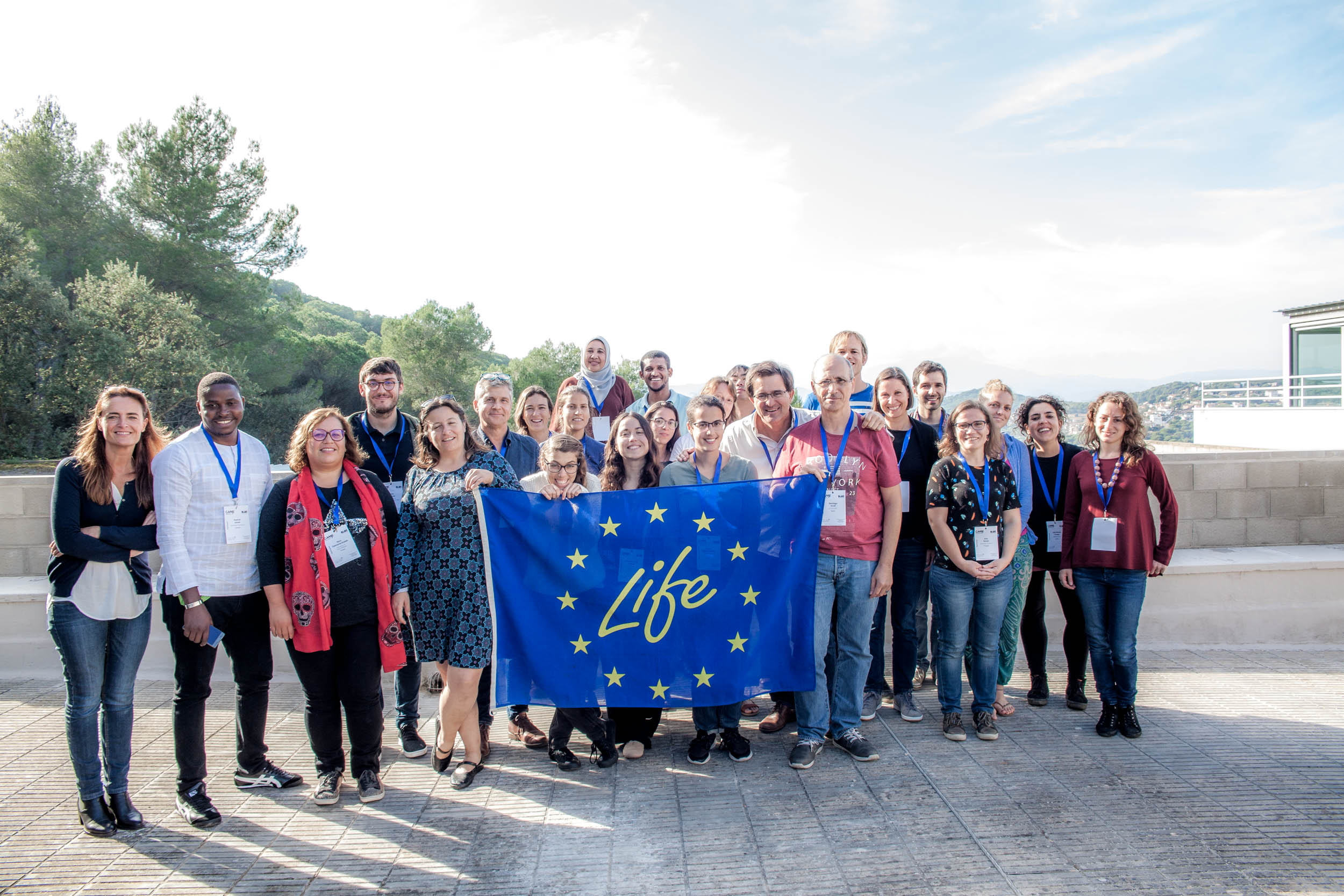
MEDCHANGE will use the aforementioned files to reconstruct the dynamics of coastal and terrestrial ecosystems on a Mediterranean scale, interacting with natural and anthropogenic disturbances. The objectives will be addressed by an international team composed of researchers from Germany, Australia, Spain, Tunisia, Croatia, and Greece, all experts in Marine Phanerogam Ecology, Paleoecology, and Biogeochemistry. Geological, chemical, molecular, palynological, and isotopic indicators or proxies will be studied, along with historical and archaeological information from the selected locations.
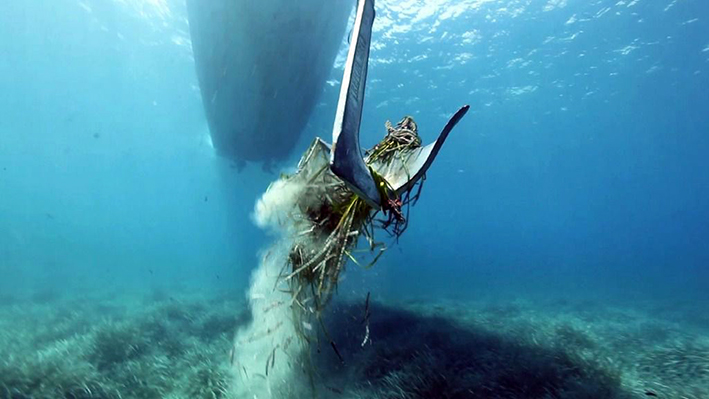
The reconstructed time series will allow the establishment of reference values (pre-anthropic), the discrimination between the anthropic and natural components of disturbances, the description and prediction of change patterns (trends, cycles, resilience), and the prognosis of the expected evolution of coastal ecosystems, particularly those dominated by the valuable Mediterranean endemic marine phanerogam Posidonia oceanica. Furthermore, the project will assess the role of the sediments of this species as biogeochemical sinks.
The objectives of this project align perfectly with those set out in the Spanish Strategy for Science, Technology and Innovation 2021-2027, the sustainable development goals of the 2030 Agenda, and the National Strategy for Coastal Adaptation to the Effects of Climate Change. In particular, MEDCHANGE makes a significant contribution to providing the scientific foundations to meet
Goals 13. Take urgent action to combat climate change and its impacts, and 14. Conserve and sustainably use marine resources.
Related news
Publications
Details
Reference: PID2020-117639GB-
Financing: Ministry of Science, Innovation and Universities
Start date: 01/09/21
End date: 31/08/2024
Contact email: oserrano@ceab.csic.
End date: 31/08/2024
Contact email: oserrano@ceab.csic.
Project members and collaborators
Òscar Serrano Gras (Spain)
Miguel Ángel Mateo Mínguez (Spain)
Montserrat Soler (Spain)
Delfina Cornejo (Spain)
Noemi Silva Sánchez (Spain)
Rym Zakhama (Tunisia)
Paul Lavery (Australia)
Valerio Zupo (Ischia, Italy)
Melita Mokos (Croatia)
Harald Biester (Germany)
Eugenia Apostolaki (Greece)
Carmen Leiva-Dueñas (Spain)
Berta Batlles
Bernat Martí Alsina
Uxue Moreda
Marina Escardò
Participating and collaborating institutions
CSIC, Spain
University of Barcelona (UB)
Edith Cowan University (Perth, Australia)
University of Tunis, Tunisia
Hellenic Centre for Marine Research (HCMR), Greece
University of Zadar, Croatia
Zoological Station of Naples (SZN), Italy
Technical University of Braunschweig, Germany