
The First Scientific-Technical Course on Blue Carbon Quantification Concludes
Last Friday, 15 June, we concluded the I Scientific-Technical Course on Quantification of…

I Course CT – BLUE CARBON
The First Scientific-Technical Course on Blue Carbon Quantification in Seagrass Meadows was…

Gloria Misson, PhD student at the University of Trieste (Italy)
Gloria Misson has been working with GAME members at CEAB-CSIC for the past 3 months. …

LET'S GO FOR THE PREMIERE, WELCOME TO THE NEW GAME PORTAL
The members of GAME present to you the group's new website, more dynamic, modern and…
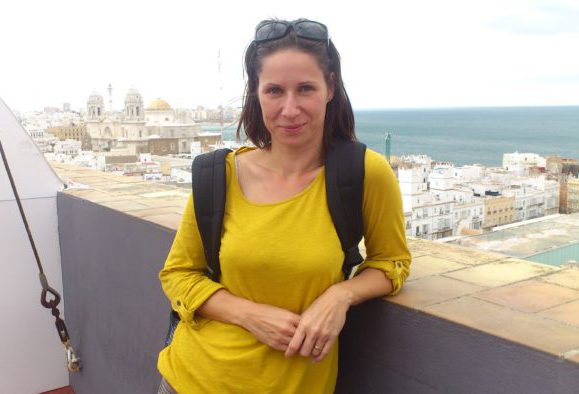
Dr Mokos visiting GAME
Melita Mokos is a marine biologist, PhD, working as a postdoc at the University of…
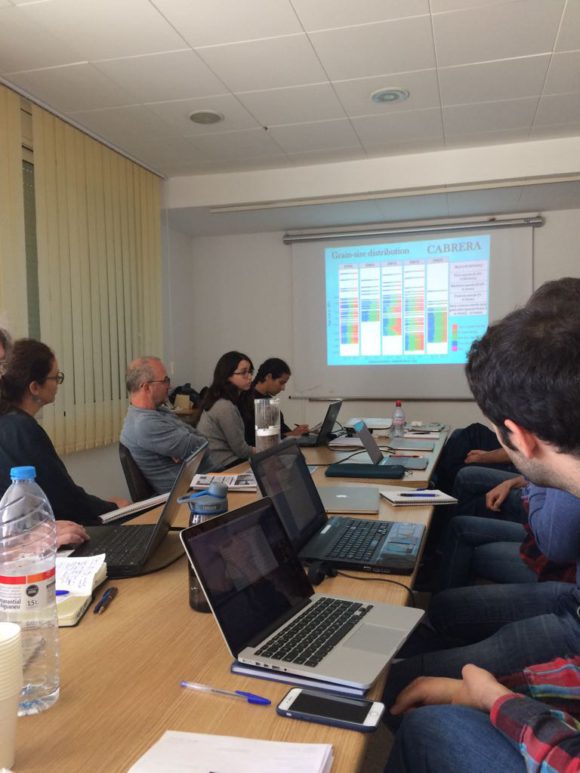
The PALEOPARK project workshop concludes successfully.
From 18 to 21 April, a workshop took place within the framework of the project…
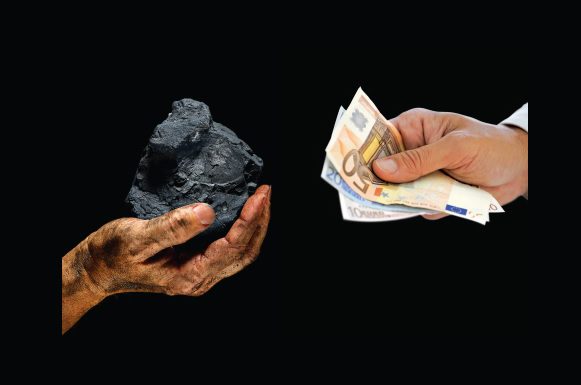
Seagrass meadows and salt marshes as natural CO2 sinks: a potentially profitable resource
Mateo, MA. Expert in Blue Carbon. Senior scientist at the Blanes Advanced Studies Centre…
Past, present and future environmental, biological and social transitions in coastal ecosystems (FOREPAST)
Jordi Pagès, who has recently been awarded a Marie Skłodowska-Curie Action, will be working on…

Jordi Pagès awarded a Marie Skłodowska-Curie Action
Jordi Pagès, currently a research fellow at Bangor University (Wales, United Kingdom), has recently…

SUMILEN ends, Blue Carbon continues
The SUMILEN project funded by the Ministry of Economy and Competitiveness, carried out by the group…
The First Scientific-Technical Course on Blue Carbon Quantification Concludes
Last Friday, 15 June, we concluded the I Scientific-Technical Course on Quantification of…
I Course CT – BLUE CARBON
The First Scientific-Technical Course on Blue Carbon Quantification in Seagrass Meadows was…
Gloria Misson, PhD student at the University of Trieste (Italy)
Gloria Misson has been working with GAME members at CEAB-CSIC for the past 3 months. …
LET'S GO FOR THE PREMIERE, WELCOME TO THE NEW GAME PORTAL
The members of GAME present to you the group's new website, more dynamic, modern and…
Dr Mokos visiting GAME
Melita Mokos is a marine biologist, PhD, working as a postdoc at the University of…
The PALEOPARK project workshop concludes successfully.
From 18 to 21 April, a workshop took place within the framework of the project…
Seagrass meadows and salt marshes as natural CO2 sinks: a potentially profitable resource
Mateo, MA. Expert in Blue Carbon. Senior scientist at the Blanes Advanced Studies Centre…
Past, present and future environmental, biological and social transitions in coastal ecosystems (FOREPAST)
Jordi Pagès, who has recently been awarded a Marie Skłodowska-Curie Action, will be working on…
Jordi Pagès awarded a Marie Skłodowska-Curie Action
Jordi Pagès, currently a research fellow at Bangor University (Wales, United Kingdom), has recently…
SUMILEN ends, Blue Carbon continues
The SUMILEN project funded by the Ministry of Economy and Competitiveness, carried out by the group…
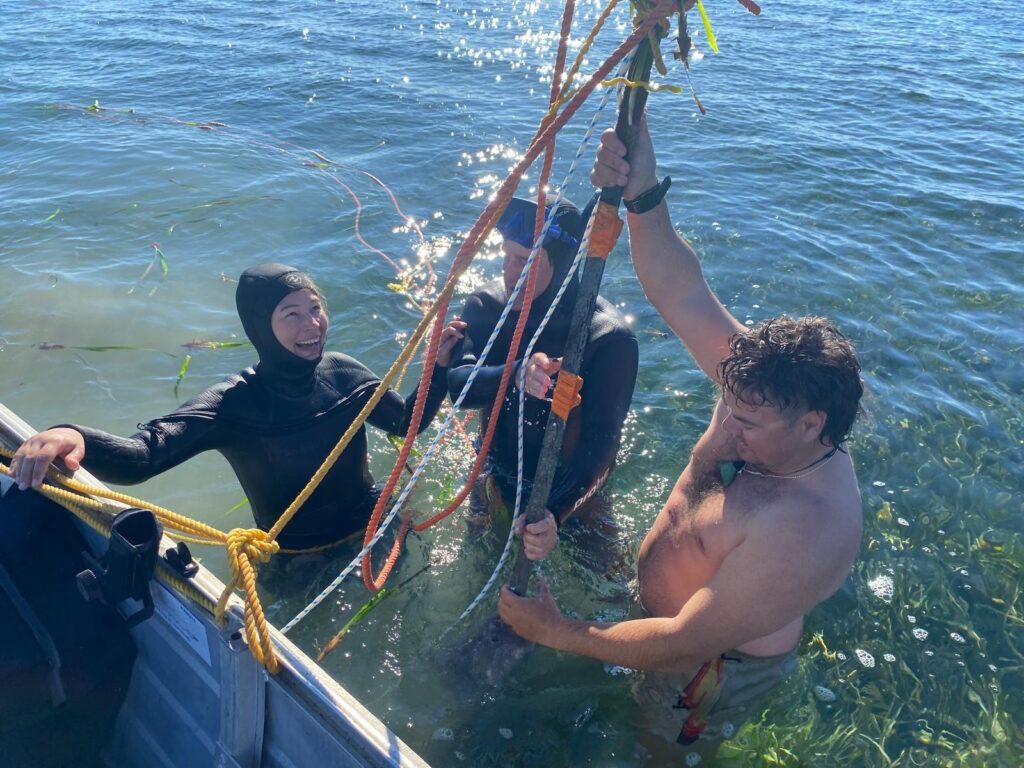
The biodiversity associated with the seagrass meadows of Shark Bay, under the scrutiny of new environmental DNA technologies
The GAME group is participating in an international campaign to assess the biodiversity and natural capital of the seagrass meadows in Shark Bay, Western Australia. BIOSFERA Research & Conservation SL (hereinafter, BIO) received a two-year project from Conservation International Australia to create a "Toolkit for Capital Assessment…
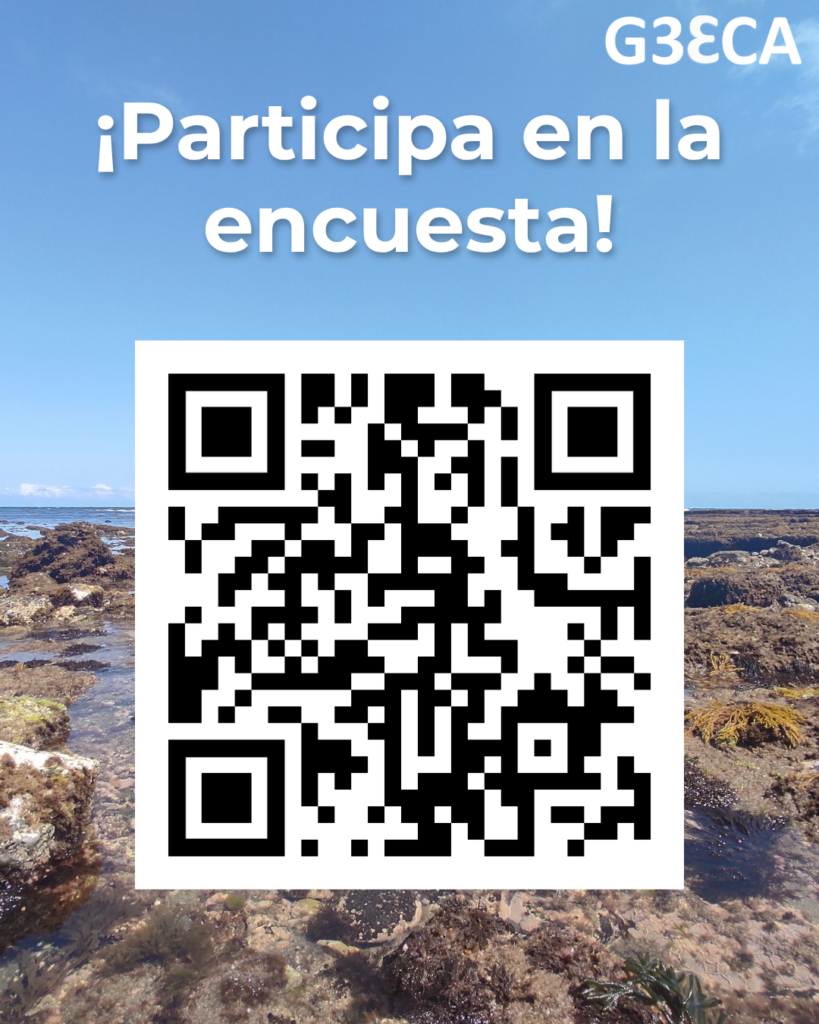
We want to know your opinion about the Spanish coastal ecosystems.
G3ECA launches a survey to understand how the public perceives the state, threats, and benefits of coastal ecosystems. How do we perceive the condition of our coasts? Which threats do we consider most significant? What benefits do coastal ecosystems provide us, and which actions should be prioritised to ensure their conservation? The aim is to respond to…

Scientists discover an "invisible tool" that lasts 14,000 years and reveals the memory of our soils' health
An international team of researchers has identified a soil protein capable of acting as a "biological clock" to reconstruct the health of ecosystems over millennia. The study, published in the scientific journal Catena, demonstrates that the soil protein related to glomalin (GRSP) is preserved in soils for at least 14,000 years,…

The restoration of blue carbon arrives at the Lindau Nobel Laureate Meetings
Researchers Nicole Foster and Óscar Serrano, members of the GAME group (Group of Aquatic Macrophyte Ecology, CEAB-CSIC), were selected as finalists in the 2026 edition of the Scientists for Nature Challenge: A Quantum Leap for Biodiversity, held as part of the 75th anniversary of the Lindau Nobel Laureate Meetings. The competition, organised by the initiative Families for…

Europe unites around the first recommendations for seagrass meadow restoration at a continental scale
The GAME (CEAB-CSIC) joins an alliance of scientists from 17 countries to urge policymakers to protect and restore one of Europe's most vital marine ecosystems. The European Seagrass Restoration Alliance (ESRA) recently published the European Recommendations on Seagrass Meadows…

Nicole Foster, first researcher at CEAB-CSIC to receive a Junior Leader grant from the “la Caixa” Foundation
Postdoctoral researcher Nicole Foster, member of the Group of Aquatic Macrophyte Ecology (GAME) at the Centre for Advanced Studies of Blanes (CEAB-CSIC), has been selected for a Junior Leader Retaining grant from the “la Caixa” Foundation, becoming the first researcher from CEAB to receive this grant. The Junior Leader Retaining programme is one of the aids…

GAME researchers contribute to the new UNESCO report "People and Nature in UNESCO Sites: Global and local contributions"
New findings reveal the true global value of UNESCO-designated sites and what we risk losing if they are not prioritised. The report "People and Nature in UNESCO Sites: Global and Local Contributions" is a call to raise ambition. It highlights how…

Saving seagrass meadows could help save the world's coastlines.
Seagrass meadows could be one of the most effective solutions to protect coastlines against the advance of climate change. This is highlighted in a recent article published in Mongabay, which emphasises the fundamental role of these ecosystems in reducing wave energy and stabilising sediments. In the…

EFFECTIVE brings together its partners in Blanes to advance the restoration and ecosystem management of the Mediterranean
The European project EFFECTIVE, funded by the Horizon Europe programme, held its third consortium meeting at the Centre d’Estudis Avançats de Blanes (CEAB‑CSIC), where more than 40 participants from 12 countries gathered for three days to coordinate scientific, technical, and management advances aimed at the protection and restoration of the Mediterranean. The meeting…

Open public consultation for the blue carbon methodology in coastal wetlands
CERCARBONO has launched the public consultation period for the methodology CM-LU-CW-001 Blue Carbon Methodology for Mitigation of Climate Change in Coastal Wetlands, a key document to advance the standardisation of climate mitigation projects based on coastal wetlands. The consultation process invites all interested parties — including developers of…